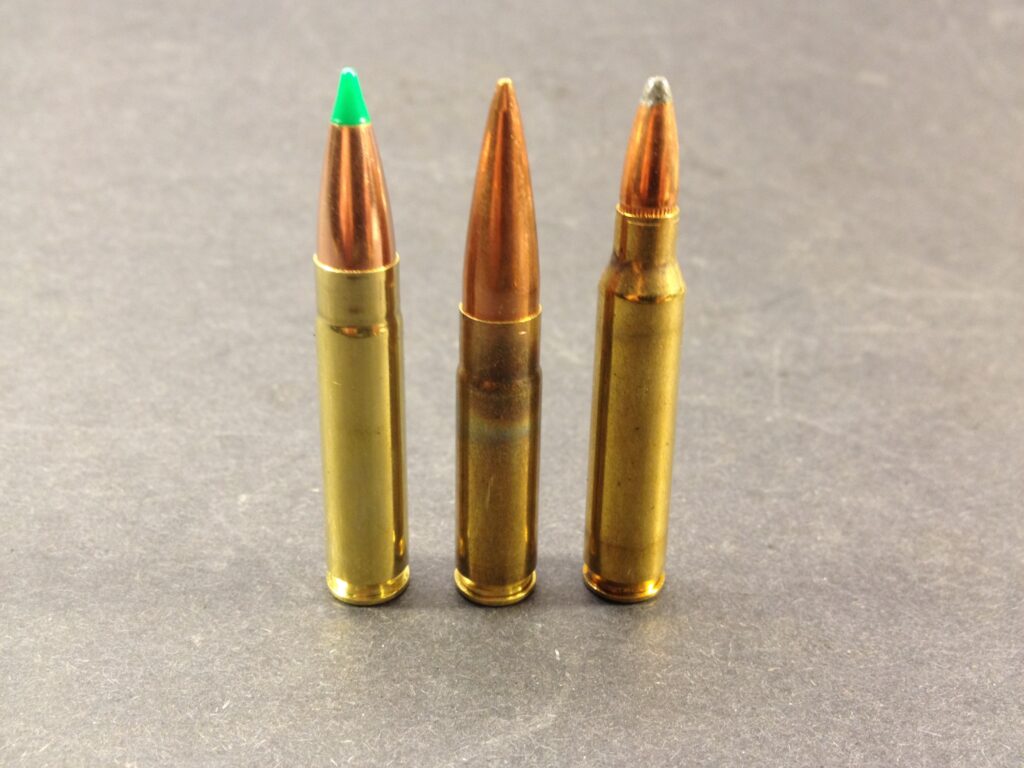
300 AAC vs 300 Blackout: Understanding the Key Differences
The world of ammunition can be confusing, especially when similar names are used for different products. The 300 AAC Blackout and the 300 AAC are two such examples. While the name suggests a direct relationship, there are important distinctions to understand. This article will delve into the nuances between the 300 AAC Blackout (often shortened to 300 Blackout or 300 BLK) and the concept of 300 AAC, clarifying any potential confusion. We’ll examine their origins, specifications, performance characteristics, and intended uses to provide a comprehensive understanding.
The Origins of the 300 AAC Blackout
The 300 AAC Blackout cartridge was developed by Advanced Armament Corporation (AAC) in collaboration with Remington Defense. The project started around 2009, and its primary goal was to create a cartridge that offered similar ballistics to the 7.62x39mm Soviet round but could be effectively used in the AR-15 platform. This was crucial because the 7.62x39mm requires a different bolt and magazine than the standard AR-15, creating logistical and compatibility issues.
The 300 Blackout’s design focused on maximizing subsonic performance for suppressed fire while also maintaining respectable supersonic capabilities. This versatility made it appealing to military, law enforcement, and civilian shooters alike. The cartridge is designed to function reliably in short-barreled rifles (SBRs), making it a popular choice for compact weapon systems.
What is 300 AAC?
Now, let’s address the term “300 AAC.” It’s essential to understand that 300 AAC is more of a general term referring to cartridges developed in conjunction with, or by, Advanced Armament Corporation (AAC). The 300 AAC Blackout is the most prominent and widely recognized cartridge to come out of this association. However, using “300 AAC” alone can be ambiguous, as it doesn’t specifically identify the cartridge in question. Therefore, it’s always best to use the full name, 300 AAC Blackout, to avoid confusion.
Key Specifications and Differences
The 300 AAC Blackout is characterized by its .308-inch bullet diameter and its ability to fire both subsonic and supersonic rounds. Subsonic rounds are designed to travel at speeds below the speed of sound (approximately 1,125 feet per second), which reduces the noise signature when used with a suppressor. Supersonic rounds, on the other hand, offer higher velocities and flatter trajectories for longer-range shooting. The case is based on the 221 Fireball, necked up to accept a .308 diameter bullet. This allows it to use standard AR-15 magazines and bolts with only a barrel change.
Bullet Weight and Velocity
The 300 AAC Blackout offers a wide range of bullet weights, typically ranging from 110 grains to 220 grains. Supersonic loads often utilize lighter bullets (110-125 grains) to achieve higher velocities, while subsonic loads use heavier bullets (200-220 grains) to maintain stability at lower speeds. A typical 125-grain supersonic load can achieve velocities of around 2,200 feet per second, while a 220-grain subsonic load will travel at approximately 1,000 feet per second.
Case Dimensions
The 300 AAC Blackout has a case length of 1.368 inches and an overall length of 2.260 inches. These dimensions are crucial for ensuring proper feeding and function in AR-15 magazines. The case head diameter is the same as the 223 Remington/5.56 NATO, further contributing to its compatibility with existing AR-15 components.
Performance and Applications
The 300 AAC Blackout’s versatility makes it suitable for a variety of applications. Its subsonic capabilities make it an excellent choice for suppressed shooting, minimizing noise and reducing the risk of detection. This is particularly valuable for military and law enforcement operations where stealth is paramount. The supersonic loads provide adequate stopping power for hunting medium-sized game and offer acceptable performance for self-defense scenarios.
Hunting
For hunting, the 300 Blackout is effective on deer, hogs, and other similar-sized animals within reasonable ranges (typically under 200 yards). The heavier subsonic loads can be used for close-range hunting, while the lighter supersonic loads offer greater range and flatter trajectories. Proper bullet selection is crucial for ethical and effective hunting, ensuring adequate penetration and expansion upon impact.
Self-Defense
In a self-defense situation, the 300 Blackout provides more stopping power than the 5.56 NATO round, especially at close ranges. Its ability to function reliably in short-barreled rifles makes it a viable option for home defense, allowing for greater maneuverability in confined spaces. However, it is crucial to be aware of the potential for over-penetration, especially in urban environments.
Tactical Applications
The 300 Blackout was initially designed with tactical applications in mind. Its ability to be suppressed and its effectiveness in short-barreled rifles make it well-suited for special operations and law enforcement. The cartridge’s versatility allows operators to switch between subsonic and supersonic loads depending on the mission requirements, providing a significant advantage in various scenarios. [See also: AR-15 vs AK-47: A Comprehensive Comparison]
Advantages of the 300 AAC Blackout
- Versatility: Capable of firing both subsonic and supersonic rounds.
- Compatibility: Works with standard AR-15 magazines and bolts (with a barrel change).
- Suppressed Performance: Excellent performance with suppressors, minimizing noise signature.
- Stopping Power: Provides greater stopping power than 5.56 NATO, especially at close ranges.
- Short-Barreled Rifle Compatibility: Functions reliably in SBRs, making it ideal for compact weapon systems.
Disadvantages of the 300 AAC Blackout
- Cost: Ammunition can be more expensive than 5.56 NATO.
- Range Limitations: Supersonic loads have a shorter effective range compared to other rifle cartridges.
- Trajectory: Subsonic loads have a significant bullet drop, requiring careful zeroing and range estimation.
- Availability: While widely available, selection may be more limited than more common cartridges like 5.56 NATO or 9mm.
The Future of the 300 AAC Blackout
The 300 AAC Blackout continues to be a popular and relevant cartridge in the firearms industry. Its unique combination of versatility, suppressed performance, and compatibility with the AR-15 platform ensures its continued use in various applications. As ammunition technology advances, we can expect to see further improvements in the performance and capabilities of the 300 Blackout cartridge. [See also: Best AR-15 Upgrades for Enhanced Performance]
Conclusion
In summary, while the term “300 AAC” might initially cause confusion, it’s crucial to understand that the 300 AAC Blackout is the specific cartridge being referred to in most contexts. Its unique design and performance characteristics make it a valuable option for a wide range of applications, from hunting and self-defense to tactical operations. By understanding the differences between subsonic and supersonic loads, as well as the cartridge’s advantages and disadvantages, shooters can make informed decisions about whether the 300 AAC Blackout is the right choice for their needs. Always remember to use the full name, 300 AAC Blackout, to avoid ambiguity and ensure clear communication.
